Thermal Performance and R-Value at Denver's Altitude
Spray polyurethane foam (SPF) commercial roofing for Denver industrial buildings - seamless thermal performance at altitude, cold-weather application protocols, silicone UV coating, and qualifying substrate requirements for Colorado Front Range conditions.
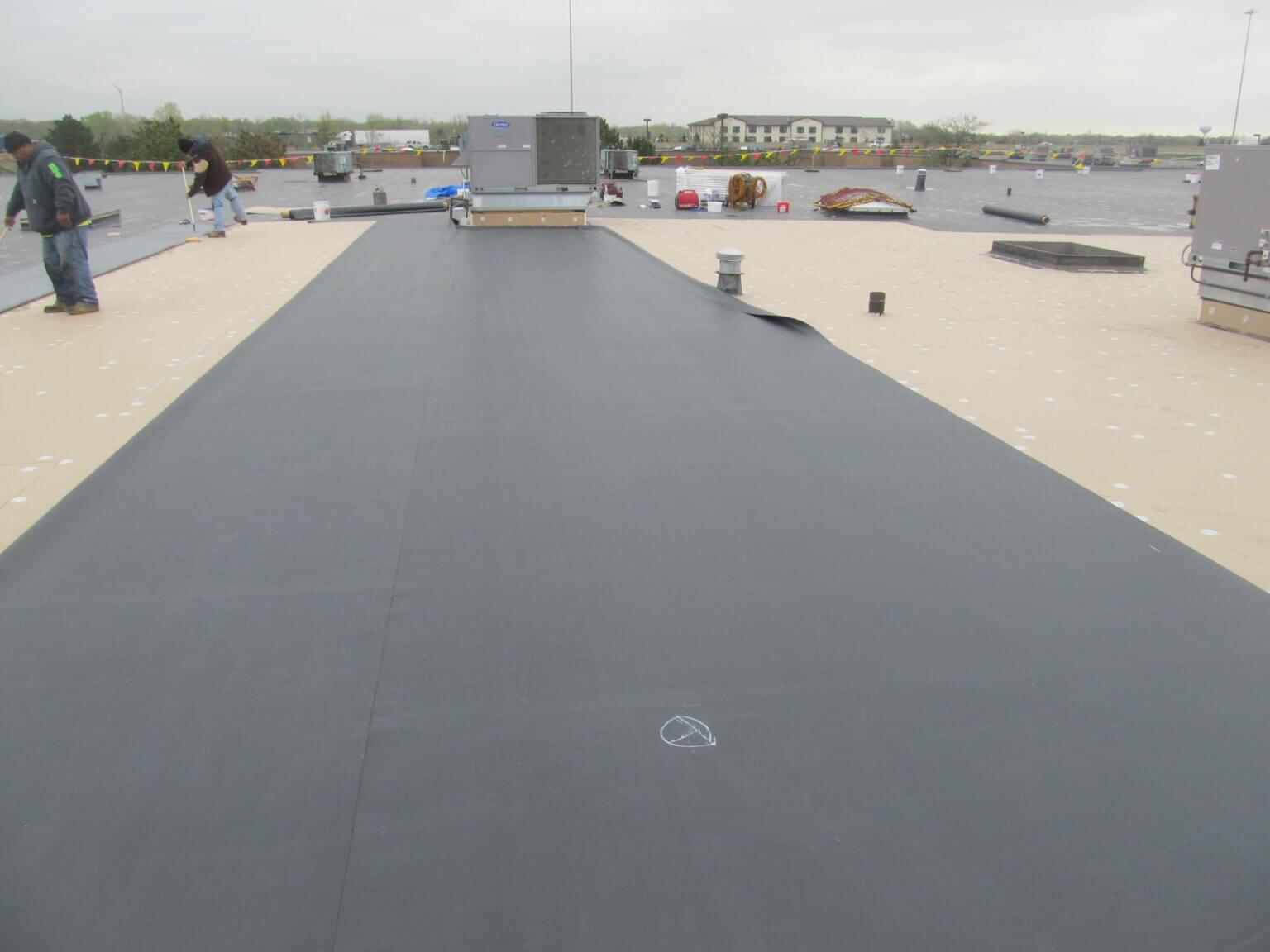
SPF roofing creates a seamless, self-insulating monolithic surface with no field seams, no lap joints, and no penetration-flashing failures in the traditional sense. It is a recover system for the right Denver industrial building - substrate qualification, wind conditions, and cold-weather application constraints narrow the window significantly. We apply SPF only where the conditions and substrate support it.
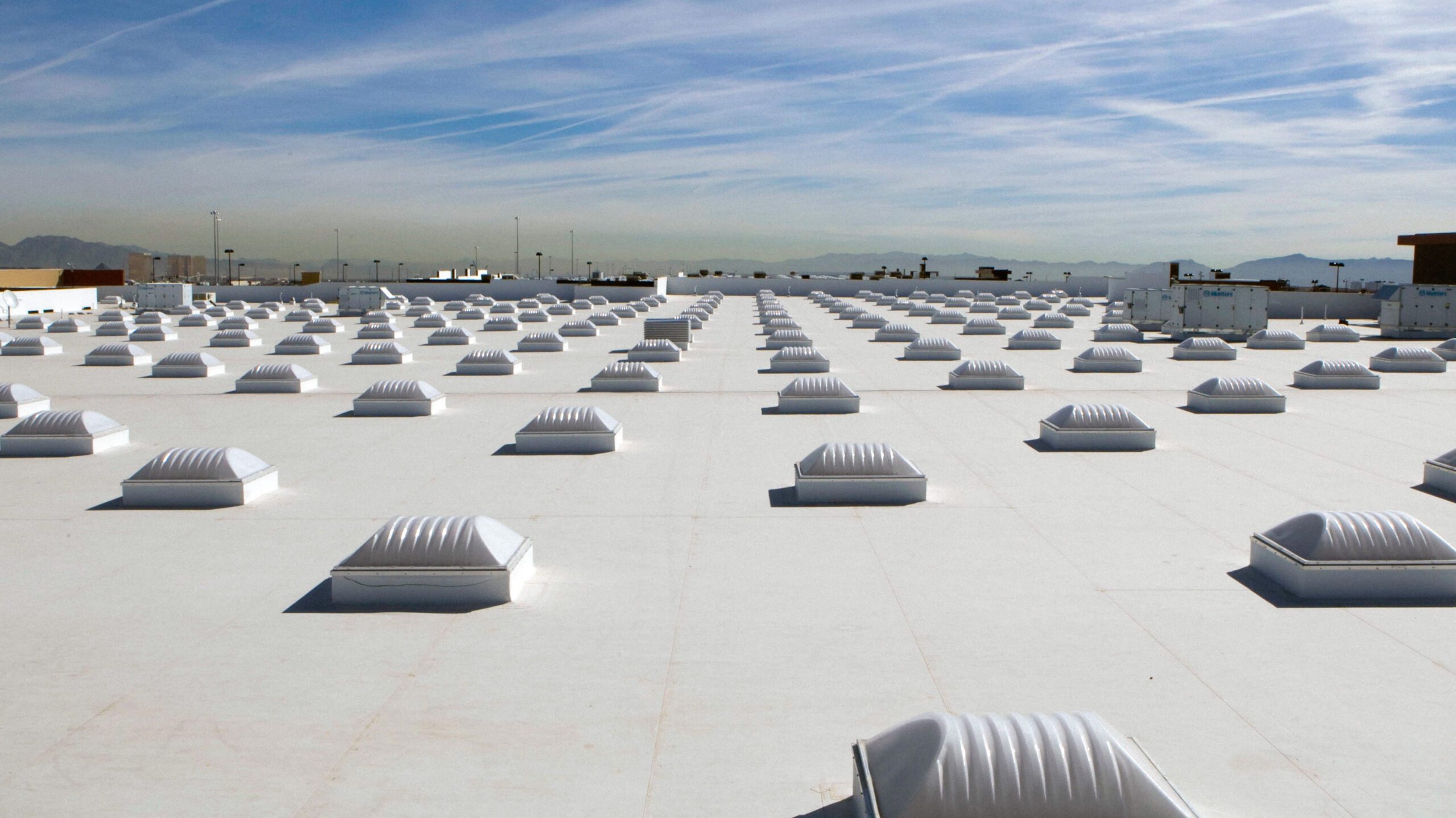
Spray polyurethane foam (SPF) roofing applies a two-component polyurethane foam directly to the existing roof surface. The foam expands, adheres, and creates a seamless insulating layer that is then protected with an elastomeric coating - silicone on Denver commercial projects - that shields the foam from UV degradation. The result is a monolithic surface with no seams, laps, or penetration flashings in the conventional sense, and an insulating value that addresses both Colorado's 2018 IECC R-value requirements and the thermal bridging that occurs at fastener points in conventional single-ply assemblies.
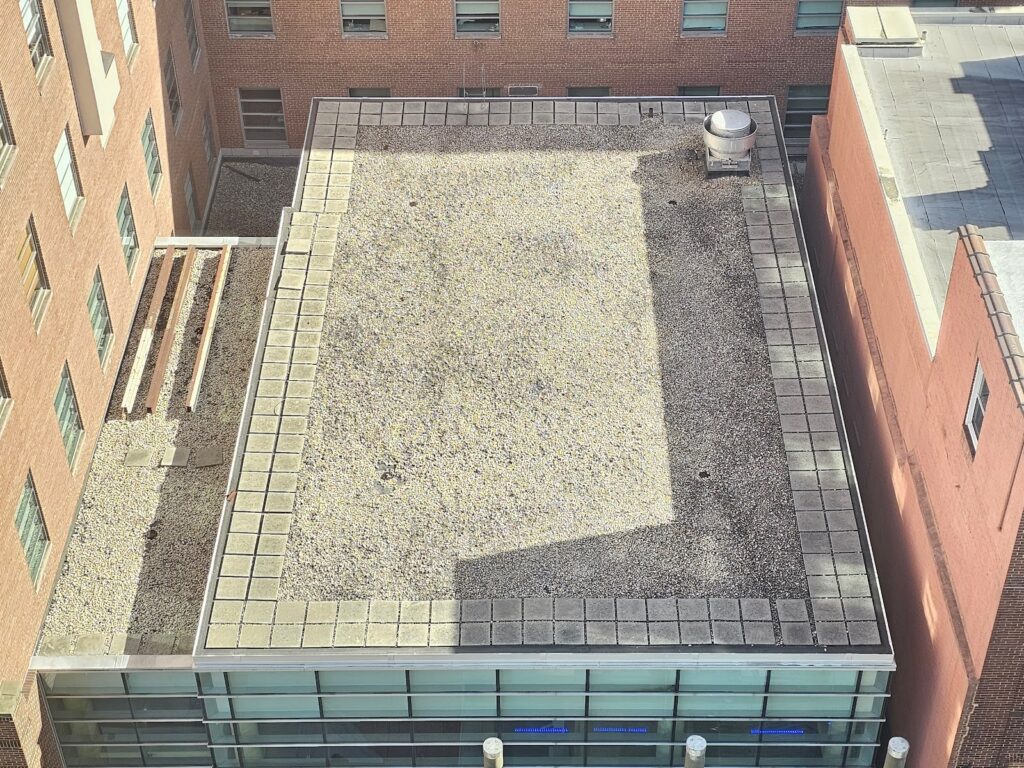
SPF is a recover system - it goes over existing roofing rather than replacing it. That makes it attractive for large-footprint industrial buildings along Denver's I-70 corridor, the Adams County warehouse zone, and the Aurora and Aurora-area distribution buildings where full single-ply tear-off would mean weeks of production disruption and significant debris disposal cost. When the existing insulation is dry and the substrate is stable, SPF recover can be faster and less expensive than conventional single-ply recover.
The application constraints are real and cannot be managed away. Wind speed above 12 mph during spray causes foam to drift, contaminating adjacent surfaces and producing an uneven application that the protective coating cannot compensate for. The substrate must be completely dry - more stringent than coating qualification - because foam adheres to moisture and will produce adhesion failures and void growth that undermine the system. Denver's fall and spring variable wind conditions, and the compressed summer application window between morning cold and afternoon thunderstorms, make SPF scheduling more demanding on the Front Range than in lower-elevation markets with more stable weather patterns.
Closed-cell SPF at 2.5 to 3 lbs per cubic foot density yields approximately R-6.5 per inch. Colorado's 2018 IECC requirements for commercial roof insulation minimum effective R-values on new and replacement roofs in Climate Zone 5 (Denver) drive toward R-30 and above on fully conditioned commercial buildings. On a SPF recover project where existing polyiso insulation below contributes R-value, the SPF layer thickness is calculated to bring the combined assembly to code compliance - we document the existing insulation R-value from available records or estimate from inspection depth, then determine the required SPF application thickness.
At 5,280 feet, thermal performance is more consequential than at lower elevations. The temperature differential between a Denver summer rooftop surface and a conditioned interior space below is substantial - white silicone-coated SPF reflects solar radiation and reduces that differential compared to dark legacy membrane, which is a meaningful HVAC load reduction on single-story commercial buildings in the Aurora and Stapleton commercial districts where roof assembly is the dominant heat-gain pathway.
Silicone Protective Coating over SPF in Denver's UV Environment
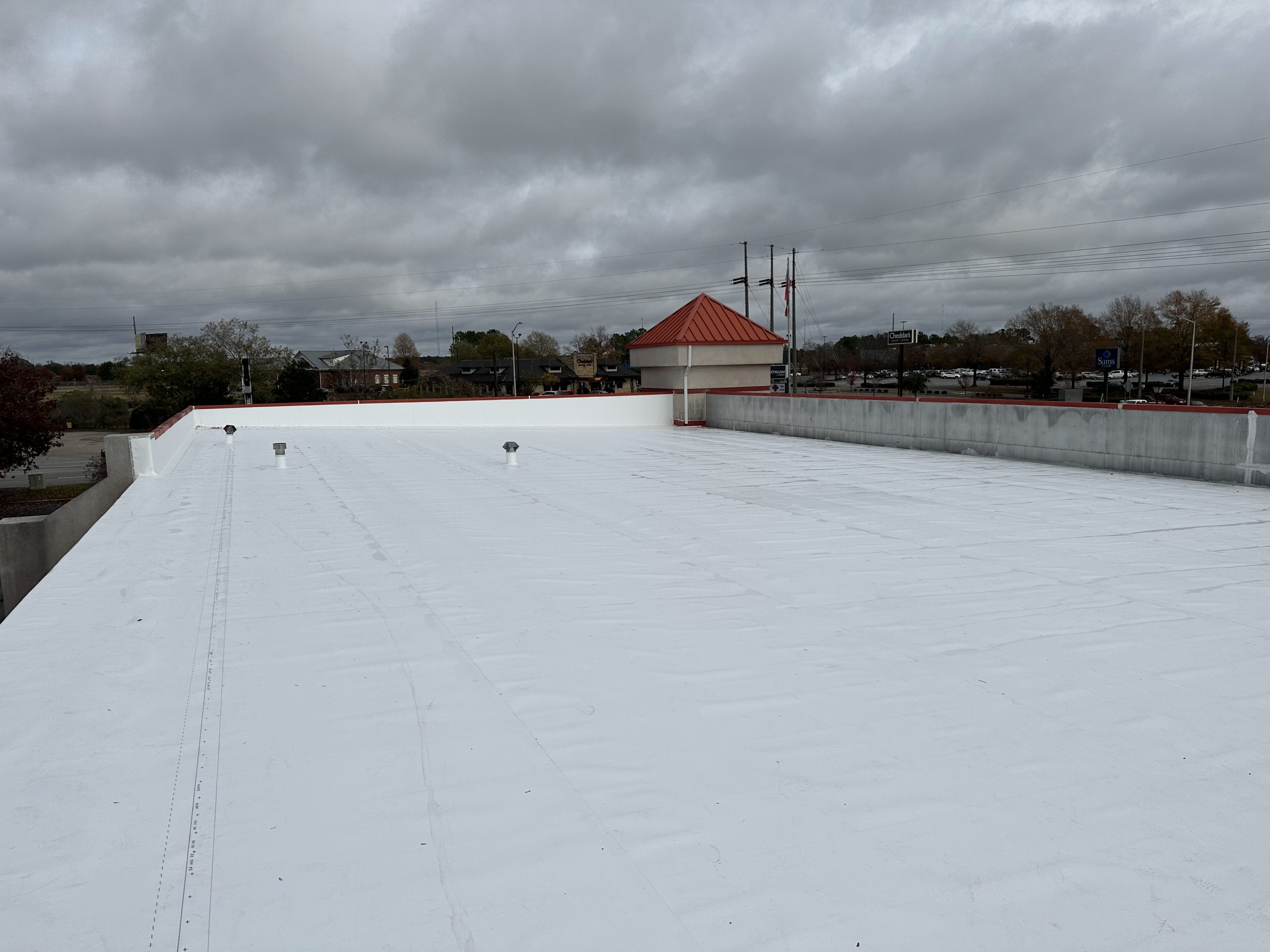
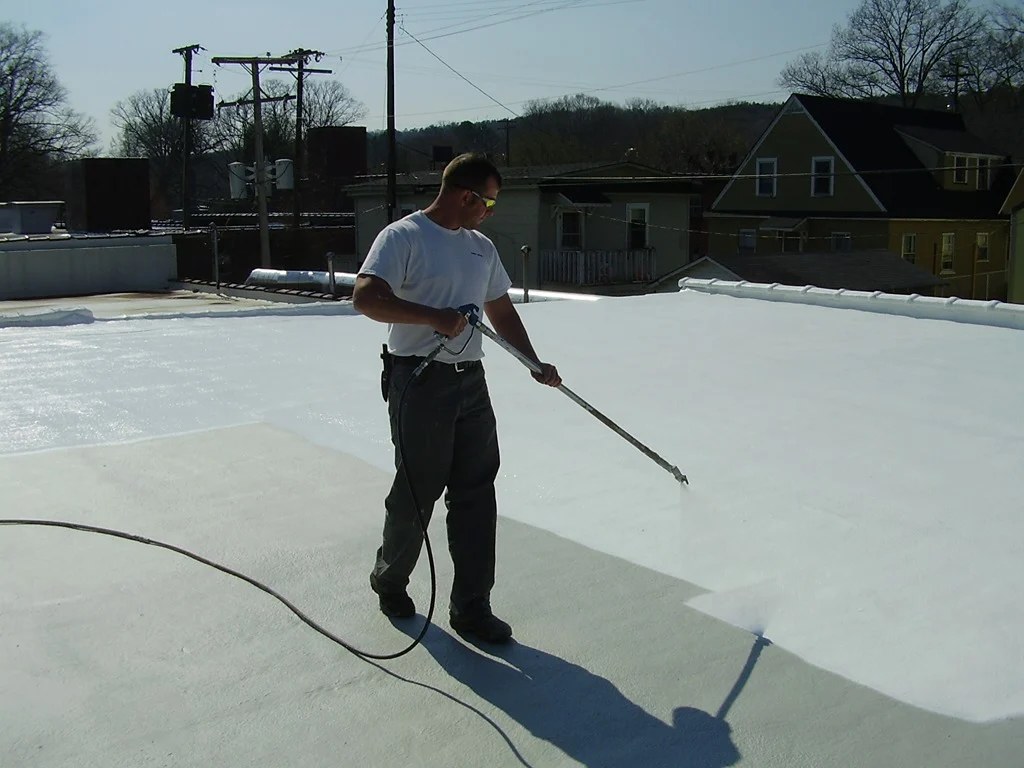
SPF foam is UV-sensitive - unprotected foam degrades within weeks under Denver's high-altitude direct sun. The silicone coating over SPF is the system's durability layer. We apply silicone at 20 to 25 mil DFT over SPF on Denver projects. Silicone's UV stability at altitude is superior to acrylic over the same foam substrate - the same reasoning that makes silicone the better coating specification for aging single-ply roofs in Denver applies to SPF protective coating. Silicone also retains elastomeric flexibility through Denver's freeze-thaw cycling without the micro-cracking that acrylic develops over repeated temperature cycling.
The protective coating is where the manufacturer warranty is anchored. We carry credentials with silicone coating manufacturers whose SPF overcoat systems are warranted for 10 to 20 years depending on foam density, coating DFT, and substrate documentation. The manufacturer's warranty inspection at closeout includes DFT verification of the coating - the same measurement standard as coating-only projects.
Denver Industrial Buildings Where SPF Makes Sense
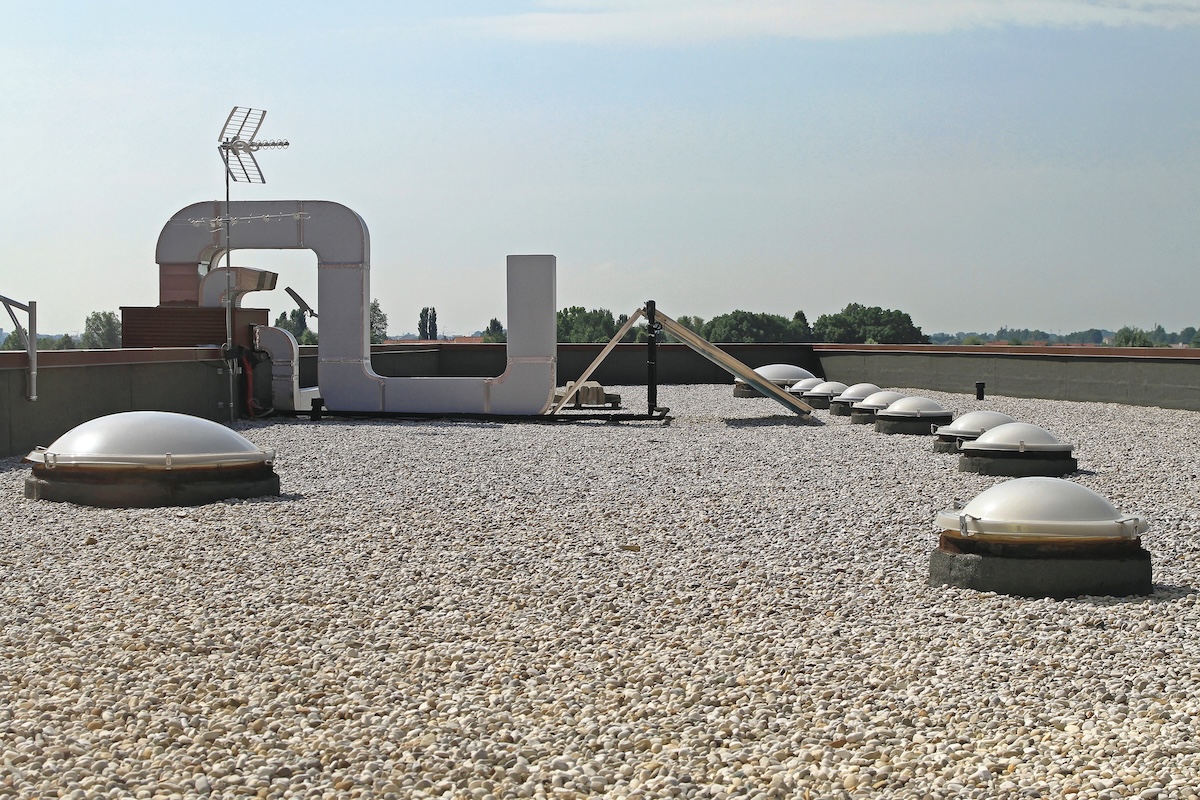
The best SPF candidates in the Denver market are large-footprint industrial buildings with complex roof geometry - multiple elevation changes, extensive rooftop equipment clusters, irregular drain patterns - where conventional single-ply would require significant custom fabrication and produce numerous field seams around each complexity. SPF's seamless application turns complex geometry from a liability into an asset.
Specific Denver corridors where SPF recover is a viable option: industrial buildings in the Adams County I- east through the airport growth corridor, manufacturing and processing buildings in the Commerce City industrial district along Quebec Street and Brighton Boulevard, and older warehouse stock in the Aurora I-225 commercial zone that has been maintained adequately and carries dry insulation on assessment. The profile these buildings share: large square footage, complex rooftop conditions, existing dry insulation, and owners who need a cost-effective recover without a full replacement capital event.
Frequently asked questions
Why doesn't every Denver commercial building use SPF roofing?
Application conditions. SPF requires sustained wind under 12 mph during spray, no rain within 24 hours before and after application, substrate moisture near zero, and ambient temperatures in the manufacturer's specified range. Denver's variable spring and fall winds, the compressed summer application window between morning cold and afternoon thunderstorms, and the Front Range's unpredictable weather patterns narrow the workable days significantly compared to more stable climates. Conventional single-ply membrane installs in a much wider range of conditions, which is why it dominates the Denver market.
Can SPF be applied over any existing Denver commercial roof?
No. The substrate must be dry, stable, and chemically compatible with polyurethane adhesion. Ballasted EPDM requires ballast removal. Coal-tar BUR is not a compatible substrate. Grease-contaminated surfaces require thorough cleaning that may not fully restore chemical compatibility. We do a substrate compatibility check and full moisture assessment before recommending SPF on any Denver project.
How does SPF handle Denver's hail events?
SPF over silicone coating has some hail tolerance - the foam layer absorbs impact energy rather than transmitting it to a rigid substrate the way single-ply over insulation does. However, SPF does not carry an FM 4470 Class 1 rating in standard configurations, and the protective coating can be damaged by large hailstones, exposing foam to UV degradation. For buildings in high-hail-frequency zones - the I-70 industrial corridor, Adams County - we discuss the hail-risk profile and include post-hail coating inspection in the maintenance scope.
Large Denver industrial building with a complex roof footprint?
We assess the substrate moisture, wind-exposure conditions, and roof geometry to determine whether SPF recover or conventional single-ply is the better scope - with cost and warranty paths for both options delivered in writing.
| Scope Format | Written roof plan and photo record |
|---|---|
| Primary Market | Denver commercial buildings |