Diagnostic Methods - Smoke Testing and Water Testing
Commercial roof leak diagnosis and permanent repair for Denver buildings - smoke testing, water testing, parapet and drain investigation, and documented repairs that close the leak source rather than applying a seasonal patch over it.
A leak's exit point in the ceiling is never where the water entered the roof. Proper diagnosis comes before repair - smoke testing, water testing, methodical elimination of probable sources. In Denver's freeze-thaw climate, a misdiagnosed leak comes back every winter. We fix leaks permanently, or we tell you why we cannot.
Commercial flat roof leaks are diagnostic problems, not just repair problems. The water appearing at a ceiling tile in a third-floor Denver office may have entered the roof at a parapet thirty feet away, traveled laterally through insulation that absorbed moisture during hail season, and found the ceiling penetration that gave it a path down. A contractor who goes directly to the area above the wet ceiling tile and patches whatever looks questionable is guessing. Sometimes they guess right. When they do not, the same location leaks again as soon as the next freeze-thaw cycle works the improperly repaired gap back open.
We diagnose first. For a new leak on a building we have not previously inspected, that means a roof walk to identify all probable sources in the zone above the reported interior wet location, followed by confirmation testing - water testing with a garden hose and a timer, or smoke testing where the geometry allows it - to isolate the active source before any repair begins. The diagnostic step adds time. It also means we repair the correct thing the first time.
Denver commercial buildings present a predictable set of leak sources shaped by the local climate. Parapets and their flashings account for a large share of leaks on buildings built before 2005, where flashing details were less standardized and freeze-thaw cycling has had decades to work joints open. Drains account for a significant portion on buildings with corrosion at the clamping ring or cottonwood debris accumulation in the bowl. Penetrations - the proliferation of conduit, gas line, and mechanical penetrations that accumulates over a building's life - account for much of the remainder, particularly on buildings where the neoprene pipe boots have been through fifteen or more years of Denver's wide daily temperature swings.
Water testing is the most reliable method for isolating a specific leak source when the interior wet location is well-defined and the roof geometry is not too complex. We work in sections: isolate a zone, flood it with a garden hose for fifteen minutes, and station a second person inside watching the suspected ceiling area. If interior water appears, we have isolated the zone. We then subdivide the zone - testing the parapet alone, then the drain, then the penetrations - until we find the specific source. Methodical, slow, and reliable.
Smoke testing is effective for buildings where the interior is large or finished enough that visual monitoring of ceiling areas is difficult. We introduce non-toxic smoke into the building through a ground-level access point, pressurize slightly, and observe the roof surface for smoke exfiltration. Smoke finds every path through the assembly and exits at the actual breach - including small breaks at seam laps and penetration flashings that water testing might miss at low flow rates. Smoke testing is particularly useful on occupied Denver buildings in the LoDo and Golden Triangle office corridors where tenants cannot have ceiling tiles removed for extended periods.
For buildings with complex histories - multiple roof layers, prior repairs, non-original penetrations added over decades - we sometimes combine both methods, using water testing to eliminate zones and smoke testing to pinpoint within the confirmed zone. We document the testing sequence in the repair report so the building owner has a complete record of the diagnostic method used.
Common Denver Leak Sources
Parapet flashings: The most common leak source on Denver commercial buildings built between 1980 and 2005. The base flashing - the membrane transitioning from the horizontal field up the vertical parapet face - separates from the coping or reglet counterflashing over time. Denver's this failure faster than in most other markets. Every freeze-thaw cycle works a small gap slightly wider; over five to ten winters the separation becomes a water path. We inspect every parapet face during diagnostic walks and probe the flashing termination for separation.
Drains: Internal drains fail at the clamping ring gasket, at the bowl-to-leader connection, and at the drain body flashing if the drain has settled relative to the membrane. We pull every drain cover and inspect the bowl and clamping ring on every leak diagnostic. Denver's spring cottonwood seed release - one of the most intense debris-loading events in the region - can partially block a drain that was clear after the previous winter, converting adequate drainage into marginal drainage that fails under a summer afternoon thunderstorm.
Penetrations: Every pipe, conduit, exhaust vent, and equipment curb is a potential breach. Pipe boot flashings fail through Denver's extreme temperature swing - rooftop temperatures on a July afternoon at altitude can exceed 150°F, and overnight lows in March can drop below 15°F. That 130-degree swing exhausts neoprene boot material faster than manufacturers' published service lives predict. Field-cut penetrations that were never properly flashed - common in older buildings where rooftop electrical was added after original installation - are persistent leak sources we find on buildings throughout the DTC and 17th Street office corridors.
Permanent Fix vs. Temporary Patch
A caulk bead over a separated parapet flashing is a temporary patch. It may stop the leak for one season. It does not restore the flashing to a watertight assembly, and when Denver's freeze-thaw cycling works the gap open again - typically within the first winter - the leak returns. We are direct with building owners when the permanent repair requires stripping and replacing a flashing section rather than applying surface sealant.
There are situations where a temporary repair is the correct call - when a capital budget is committed and the permanent repair must wait for the next cycle, or when a permanent repair requires manufacturer coordination that takes time. In those cases, we install a documented temporary repair, describe its expected service life honestly, and schedule the permanent follow-on before the next freeze-thaw season.
Every permanent repair we complete is photographed before and after, documented with materials used and installation method, and delivered in a written repair record. If the repair fails within our workmanship warranty period, we come back and repair it. We do not sell you the same repair twice.
Frequently asked questions
How long does leak diagnosis usually take before you start repairs?
For a straightforward leak above a defined interior wet area, diagnostic walk and water testing typically take two to four hours. For complex leaks on large Denver buildings with multiple possible sources, the diagnostic can take a full day. We do not start repairing until we know what we are repairing - the extra time is consistently worth it when the alternative is a second repair call after the next storm.
The same area keeps leaking after a previous contractor repaired it. Can you find out why?
Yes. Recurring leaks are almost always the result of the initial repair addressing the symptom rather than the source. In Denver's freeze-thaw climate, a misdiagnosed repair often holds through summer and fails again when the cold season works the underlying gap back open. We start with the diagnostic protocol regardless of prior repairs, because prior repair work can obscure the original breach and introduce new variables.
Do you offer emergency leak response for active leaks during a Denver storm?
Yes. We dispatch crews for emergency dry-in on buildings throughout the Denver metro. For buildings on our maintenance contract routes, after-hours emergency response is part of the contract. For non-contract buildings, we prioritize based on severity - an active leak over occupied space or sensitive equipment gets same-day response.
How do you handle leak repair on a Denver commercial building under a manufacturer warranty?
| Scope Format | Written roof plan and photo record |
|---|---|
| Primary Market | Denver commercial buildings |
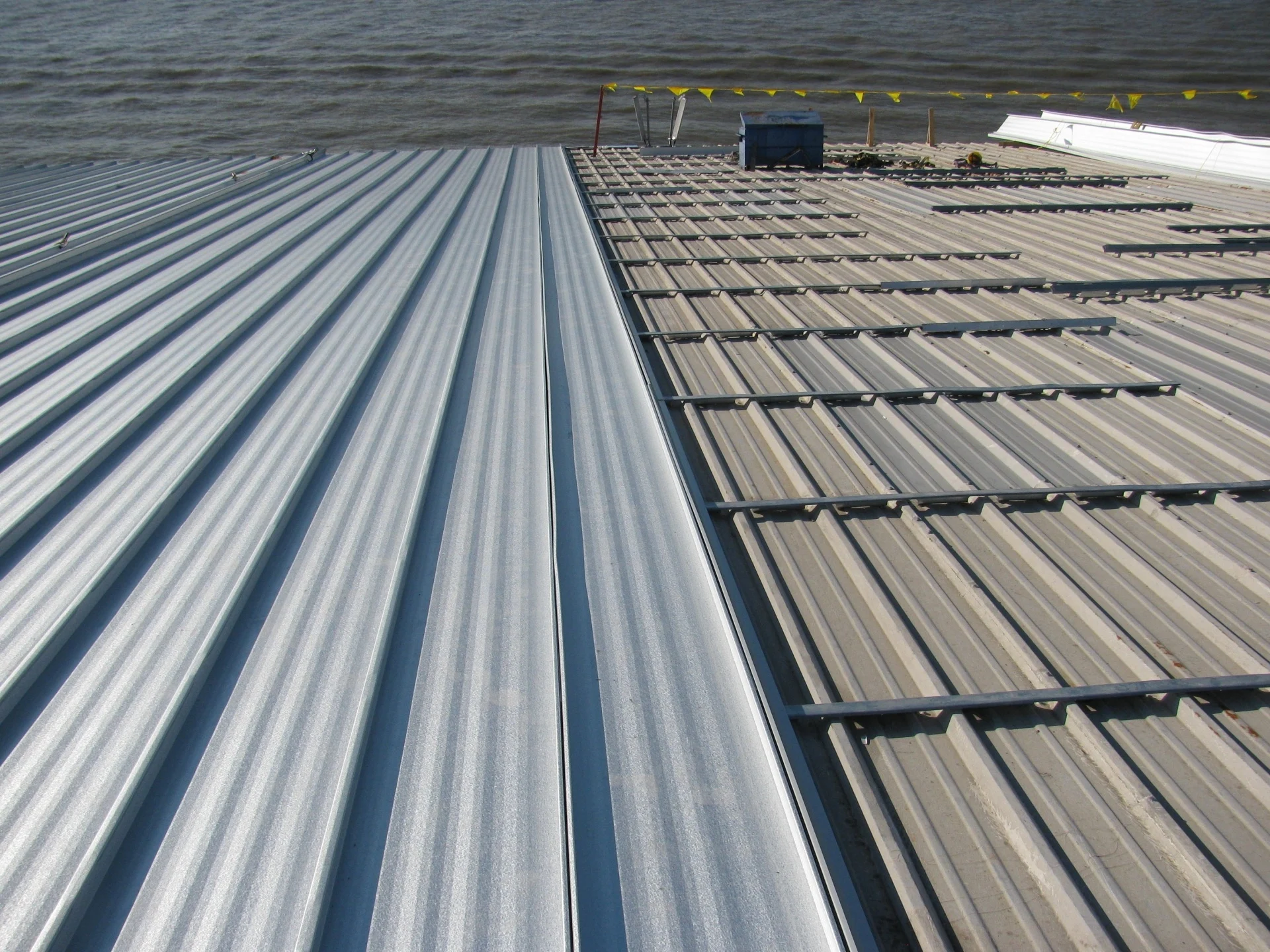
Commercial Re-Roofing in Denver, CO
Commercial Re-Roofing for commercial buildings across Denver.