Snowmelt Infiltration Paths on Denver Commercial Roofs
Commercial roof leak repair for Denver buildings - snowmelt infiltration, ice dam-driven leak paths, spring moisture cycling, and interior damage assessment scoped separately from the roofing work.
Denver roof leaks do not behave the way leaks behave in warmer markets. Snowmelt infiltration travels under the membrane along vapor paths before it enters the building. Ice dam-driven water backs up through perimeter terminations that look dry in summer. The source and the interior stain are rarely directly above each other. We find the source - not just the stain.
The most common call we get from Denver commercial building owners in March and April is a ceiling stain that appeared during the first warm week of the year. The building has had no active rain for months. What changed is that the first sustained temperatures above freezing triggered a snowmelt cycle from accumulated pack on the low-slope roof, and water that has been sitting in the insulation since January found a path into the interior as the freeze-thaw cycle shifted.
Denver's leak patterns are driven by the snowmelt and freeze-thaw cycle as much as by direct precipitation events. A commercial roof that holds snow pack through December and January will experience melt cycles every time a Chinook event raises temperatures above freezing - sometimes repeatedly in a single week. That melt water enters the roofing system at flashing terminations, membrane seams with aging adhesion, and drain areas where ice has accumulated and backed up under the membrane edge. By the time the stain appears on the ceiling in March, the infiltration path has been active for weeks and the insulation directly above the stain may be saturated across a much wider area than the stain suggests.
We trace Denver commercial roof leaks from the interior stain outward to the roof surface, pulling core samples to map saturated insulation, using infrared where the building's thermal signature makes it useful, and documenting the actual infiltration path rather than the visible symptom. The repair scope addresses the source. The documentation scope addresses what has been damaged - insulation, deck, interior finishes - for facilities records and any applicable insurance coverage.
Snowmelt on a Denver commercial flat roof follows the path of least resistance - and that path is almost never directly down through the membrane. Water that enters through a compromised flashing termination at the parapet base travels laterally under the membrane along the slope toward the drain, collecting in the low points of the insulation layer and sometimes pooling in areas that are structurally deflected from years of snow load. By the time this water saturates enough insulation to produce a visible interior stain, it has often traveled 15 to 30 feet horizontally from the actual infiltration point.
Parapet base flashings are the most common snowmelt infiltration point on Denver commercial buildings. The flexible flashing membrane that runs from the deck surface up the parapet wall and terminates under the coping cap is subject to repeated expansion and contraction from Denver's freeze-thaw cycling - 90 to 110 events per year. Over time, the termination bar that holds the top edge of the flashing against the parapet wall fatigues, the sealant behind the termination cracks, and the flashing edge opens. During snowmelt cycles, water pools at the base of the parapet and backs up through this opening rather than draining to the roof drains.
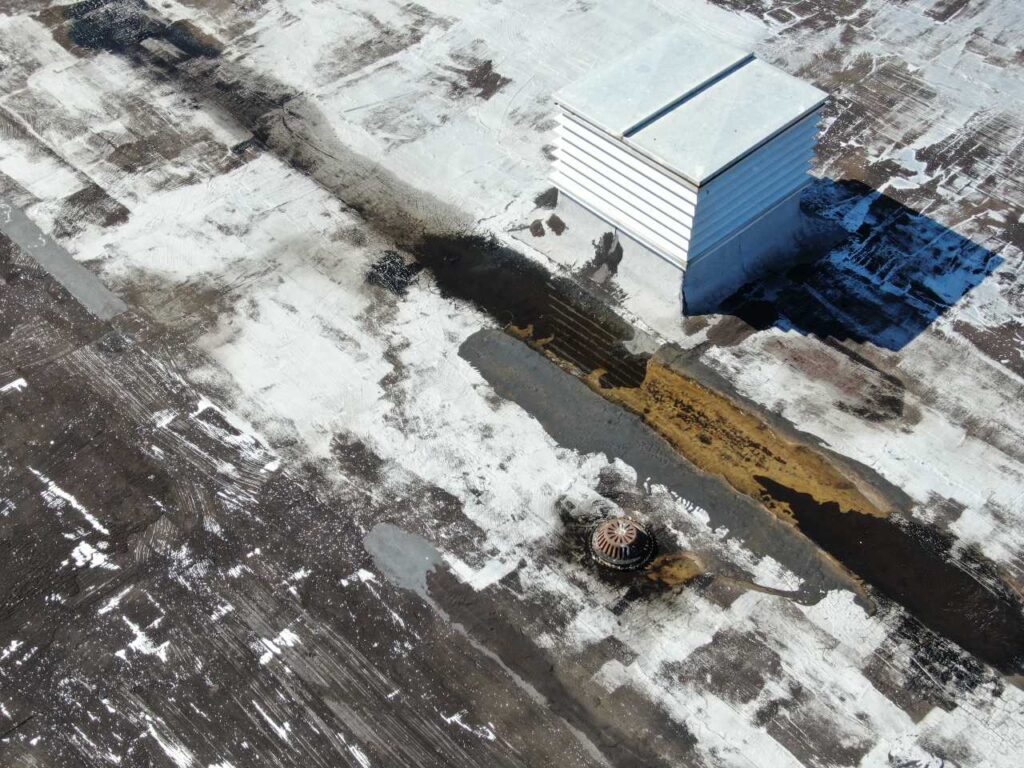
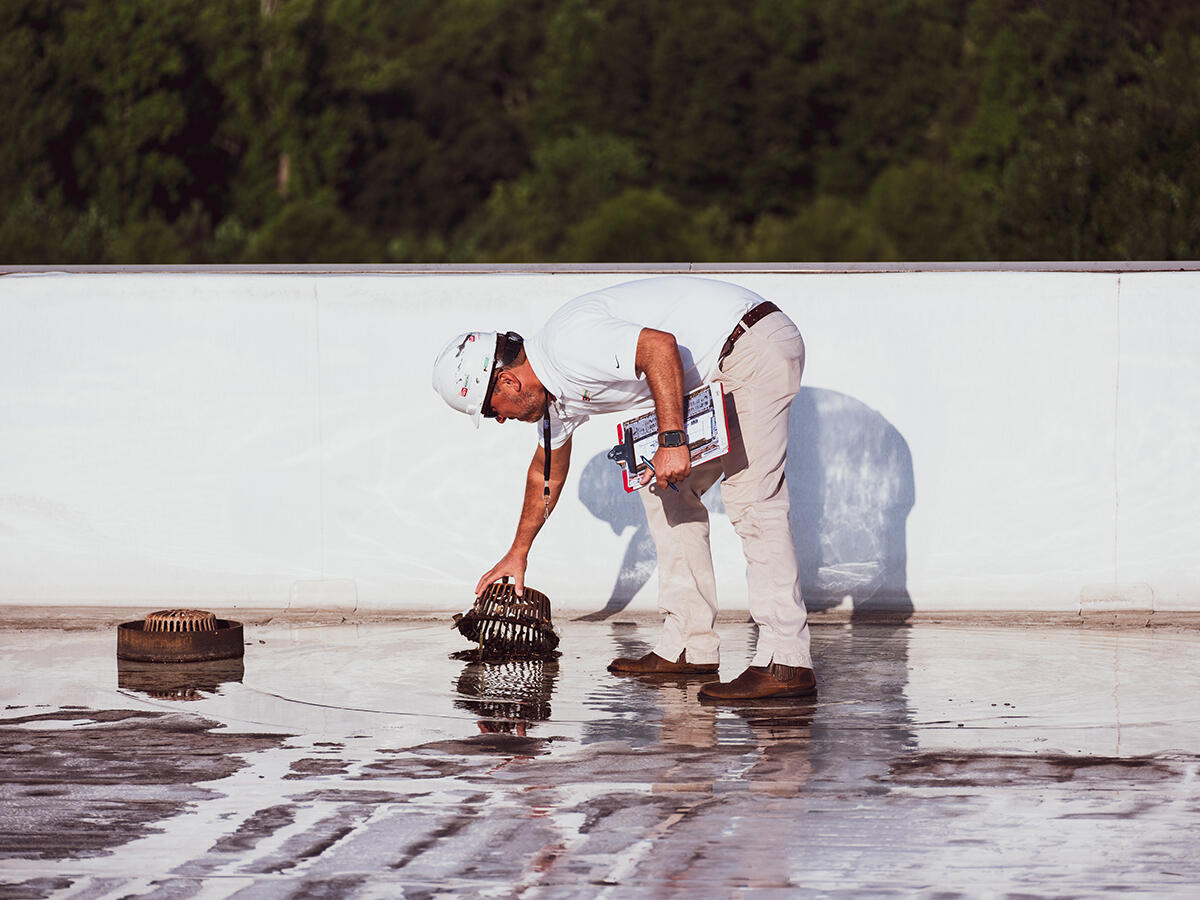
Drain area ice accumulation creates a second common infiltration path. When Denver temperatures stay below freezing for extended periods - common in December and January - drain outlet ice accumulates in the drain bowl and under the membrane edge around the drain perimeter. The membrane that laps onto the drain ring can lift slightly as ice forms beneath it. When Chinook temperatures then drive rapid melt, water enters under the lifted membrane edge before it can reach the drain outlet. We inspect and probe every drain perimeter on any Denver commercial roof where snowmelt infiltration is suspected.
Finding the Source Behind the Denver Stain
The standard leak-call response - stand under the stain and look for the hole in the roof directly above - does not work for Denver snowmelt infiltration. The source is almost never directly above the stain. We trace the leak from three directions: the interior stain pattern, the moisture-core pull map, and the roof surface inspection focused on the upslope and uphill areas from where the core pulls show saturation.
Infrared thermography is useful on Denver commercial roofs after a clear night - the temperature differential between dry and wet insulation shows up as a thermal contrast in the early morning hours before solar loading erases the signal. We use infrared as a screening tool, not as a standalone diagnostic: the infrared image tells us where to pull cores, not where to stop looking. In winter months, the thermal contrast is more pronounced, making infrared more reliable as a saturation-mapping tool than it is in July.
After we locate the infiltration source, we document both the source and the damage path: photos of the compromised flashing or membrane detail, the core pull map showing saturation extent, the interior stain location, and the geometric relationship between them. That documentation goes into the leak repair scope and the facilities records. If interior damage - ceiling tiles, insulation, drywall - is significant enough to trigger a property claim, the roofing documentation anchors the source and timeline for the interior-damage portion of the claim.
Frequently asked questions
My Denver building has ceiling stains that only appear in spring. Why?
Spring staining in Denver commercial buildings is the most common presentation of snowmelt infiltration - water that entered the roofing system during winter freeze-thaw cycles and accumulated in saturated insulation before finding a path to the interior during the first sustained warm period. The insulation acts as a reservoir: water enters slowly through compromised flashings or drain-area ice backup, accumulates through winter, and then releases into the interior as temperatures rise and the freeze-thaw cycle shifts. We trace these leaks to the actual infiltration source, not just the interior stain.
How do you find a roof leak when the source is not above the stain?
We work from three directions simultaneously: interior stain pattern analysis, moisture-core pulls at representative locations across the suspect zone, and roof surface inspection focused on the upslope areas from where cores show saturation. Infrared thermography is used as a saturation-mapping screening tool when roof and ambient conditions make the thermal contrast reliable - typically early morning after a clear night. The core map and surface inspection together locate the actual infiltration point in most cases.
Can a roof leak in Denver trigger an insurance claim?
Interior damage from a documented roof leak - ceiling tiles, insulation, drywall, flooring - may be claimable depending on the cause and policy language. Sudden and accidental water intrusion from a covered storm event is typically covered. Slow-developing infiltration from deferred maintenance or normal aging is typically excluded. We produce the roofing documentation that establishes the source and timeline; your carrier and any public adjuster you engage determine coverage based on that documentation and your policy.
How quickly can you respond to an active roof leak in Denver?
Buildings on our maintenance contracts get a four-business-hour response window for active interior leaks in Denver County. Same-day response for inner suburbs - Lakewood, Englewood, Wheat Ridge, Arvada. After-hours emergency response is available for maintenance-contract buildings. For new calls during peak demand - March and April snowmelt season, post-storm periods - response times extend but we prioritize active infiltration calls over inspection calls in the scheduling queue.
Active or recurring roof leak on a Denver commercial building?
We trace snowmelt and storm leak paths to the actual source - not just the stain - and scope the repair against what actually caused the problem. Core pulls and infrared included where the diagnosis requires it.
| Scope Format | Written roof plan and photo record |
|---|---|
| Primary Market | Denver commercial buildings |