Parapet Flashing Fatigue from Denver's Cycling Pattern
Freeze-thaw roof damage assessment and repair for Denver commercial buildings - 90 to 110 annual freeze-thaw cycles, parapet flashing fatigue, drain ice backup, and seam adhesion failure from Colorado's rapid temperature cycling.
Denver averages 90 to 110 freeze-thaw cycles per year - more than Chicago, more than Minneapolis. The difference is not the severity of Denver winters but the frequency: temperatures cross the 32-degree threshold repeatedly through fall and spring rather than staying below it for sustained periods. That repeated cycling drives flashing fatigue, seam adhesion failure, and drain ice backup at a rate that surprises building owners who expect dry-climate roofs to hold up without attention.
The freeze-thaw cycle count is the metric that matters most for commercial roof longevity in Denver, and it is the metric most building owners have never heard. Denver's 5,280-foot elevation and semi-continental climate produce a pattern where temperatures oscillate around the freezing point dozens of times per year rather than making a single extended crossing. Chicago winters drop below freezing and stay there for weeks; Denver winters hover near freezing, cross below, bounce back above, and repeat. That repeated crossing is more damaging to building envelope details than a sustained deep freeze.
Parapet base flashings are the primary failure point from freeze-thaw cycling on Denver commercial buildings. The flexible flashing membrane that transitions from the deck surface up the parapet wall is bonded to two substrates with different thermal expansion coefficients - the roofing membrane on the deck and the masonry or metal of the parapet wall face. Each freeze-thaw cycle stresses the bond between the flashing and the wall face as the two materials expand and contract at different rates. After several years of this, the termination bar adhesion fails, the flashing edge opens, and the building has an infiltration path that operates every time snowmelt occurs.
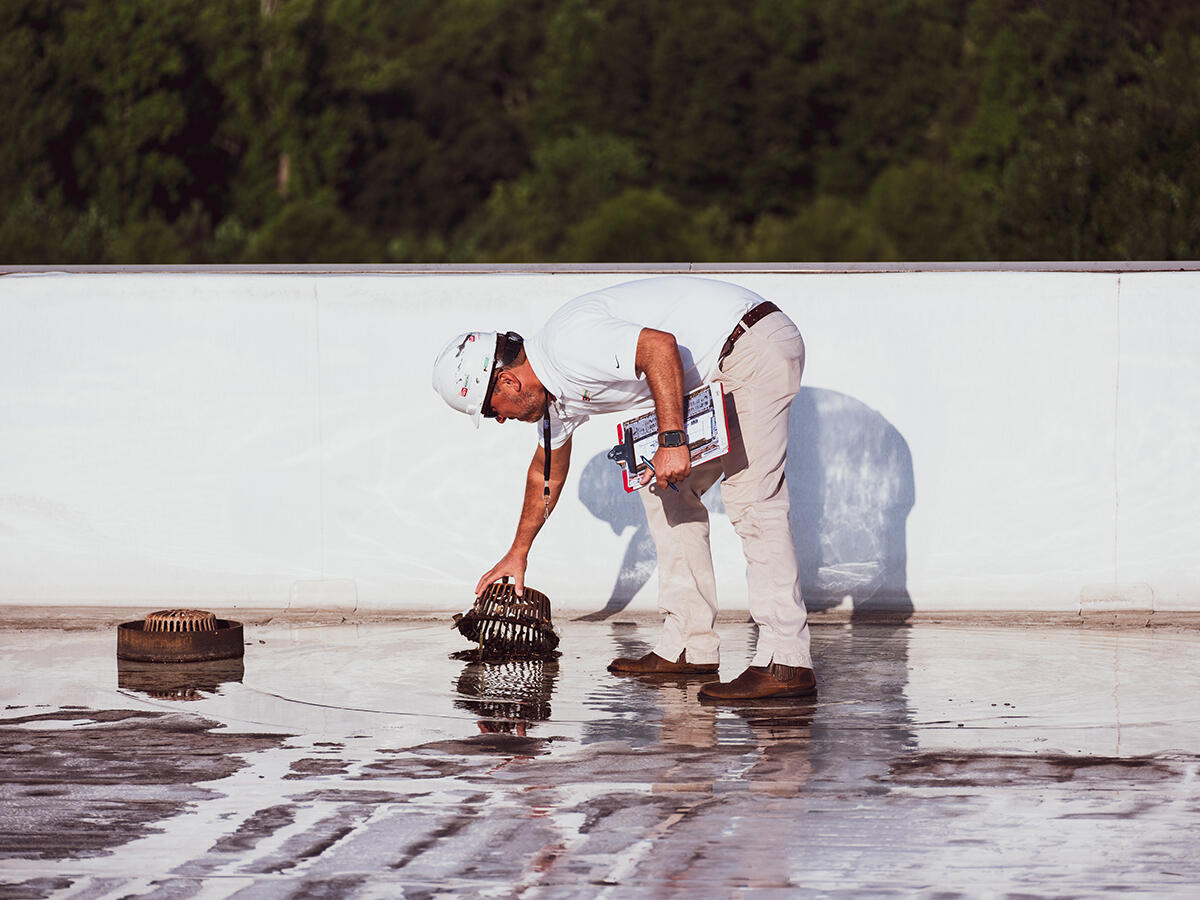
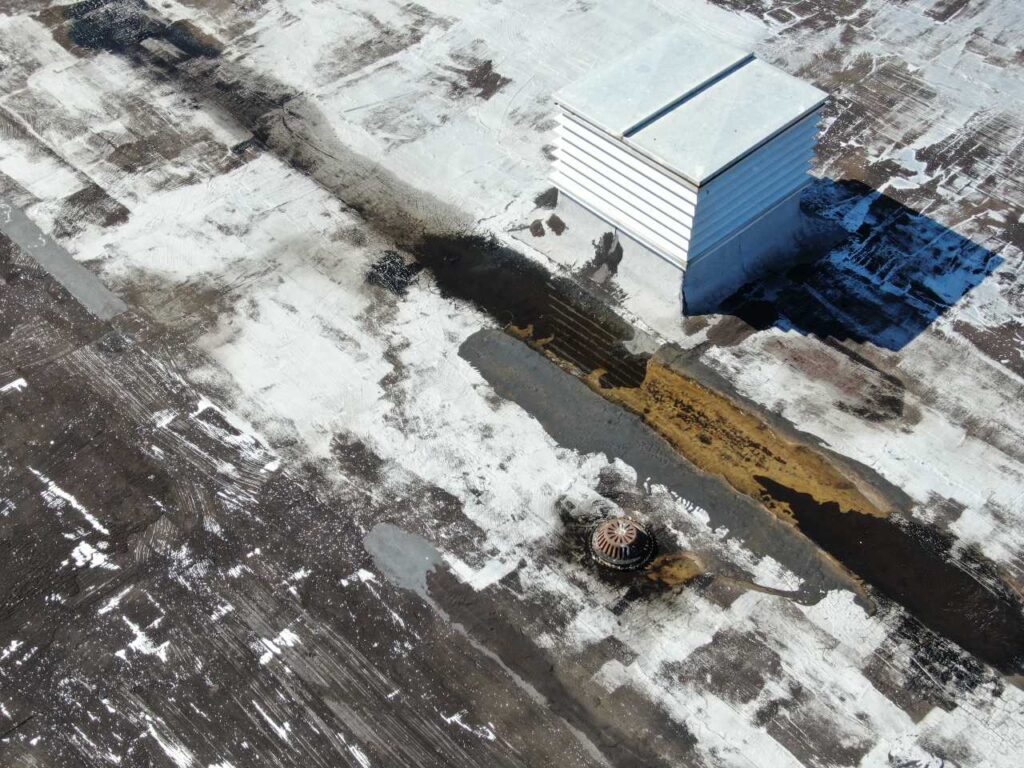
Drain ice backup is the second major freeze-thaw damage mechanism. When sustained below-freezing temperatures allow ice to accumulate in the drain bowl and around the drain outlet, snowmelt that arrives with a Chinook temperature spike cannot drain and backs up across the roof surface, finding infiltration paths at the perimeter and at any compromised seam detail. We inspect drain conditions and flashing terminations on every freeze-damage call in Denver - both are nearly always involved.
Parapet base flashings on Denver commercial buildings from the 1990s and early 2000s - the generation most commonly reaching first-replacement cycle on flashings now - were typically installed with solvent-based adhesive contact bond between the flashing membrane and the masonry parapet face. That adhesive bond has a design life that assumes a reasonable number of thermal expansion cycles. Denver's 90 to 110 annual freeze-thaw cycles, applied repeatedly over 20 to 25 years, produce cumulative adhesive fatigue at rates the original specifications did not anticipate for this climate.
Flashing failure from freeze-thaw cycling typically shows as a gradual opening at the termination bar - the metal bar that mechanically holds the top edge of the flashing against the parapet wall. The bar fasteners hold while the adhesive behind the bar fatigues. Eventually, the bar rocks forward under the combined pressure of the cycling adhesive and ice load from water that has entered behind the bar and frozen in Denver's cold cycles. At that point, the bar is still in place but the flashing is no longer waterproofing behind it.
Coping cap joints at the parapet top are the secondary infiltration point from freeze-thaw cycling. Metal coping cap sections are joined by end laps or cover plates with sealant, and that sealant is subject to the same expansion-contraction cycling as the flashing adhesive below. Failed coping cap joint sealant allows water entry at the top of the parapet wall, where it saturates the masonry and finds downward paths to the flashing interface. We inspect coping cap joints on every freeze-damage call as a matter of routine.
Drain Ice Backup Remediation
Drain ice backup in Denver commercial roofing is a systemic problem on buildings where the drain design does not account for the ice accumulation dynamics of Colorado winters. A properly functioning drain outlet in July becomes a partially blocked outlet in January when ice has built up in the drain bowl from weeks of below-freezing temperatures. The drain sump depresses below the surrounding membrane elevation by design - it is the low point where water is supposed to collect and drain. When that sump fills with ice, the low point becomes a dam.
The remediation for drain ice backup involves three steps: emergency drainage if the roof is currently ponding above the frozen drain, drain sump configuration review to assess whether the existing drain design can be modified to reduce ice accumulation risk, and membrane edge inspection at the drain perimeter to assess whether ice backup has already caused infiltration behind the membrane edge. Heated drain inserts - electric heat trace cables routed through the drain outlet - are a viable specification for Denver commercial buildings where drain ice backup has been a recurring seasonal problem. We document drain ice backup history and recommend heated drain inserts for buildings where the backup pattern recurs despite cleaning.
Interior damage from drain ice backup in Denver commercial buildings is often more extensive than the roofing scope alone. A drain that has been backing up for multiple winter seasons has been allowing water to accumulate in the insulation layer around the drain perimeter - a 10-to-20-foot radius saturation zone in typical cases. We core this zone in every drain ice backup call and include the saturation extent in the repair scope, because leaving saturated insulation around a newly cleared drain reinstates the freeze-thaw damage mechanism within one winter season.
Frequently asked questions
Why does Denver have so many freeze-thaw cycles compared to colder climates?
Denver's 90 to 110 annual freeze-thaw cycles result from the combination of the city's elevation and its semi-continental climate, where temperatures hover near the 32-degree threshold rather than dropping and staying well below it for extended periods. Chicago or Minneapolis winters produce sustained sub-freezing periods where the freeze-thaw count is actually lower because temperatures do not oscillate across the threshold daily. Denver's fall and spring transition seasons can produce multiple freeze-thaw crossings per day. That frequency is the damage driver for flashing adhesive fatigue and drain ice accumulation.
How can I tell if my Denver building has freeze-thaw flashing damage?
The most common visible indicators are: interior ceiling stains that appear or worsen in spring, parapet base flashing that has pulled away from the wall face when you run your hand along the top edge, termination bars that rock slightly when pressed against the wall, and coping cap joints where the sealant has cracked or separated. Any of these observed during a facility walkthrough warrants a roofing inspection with flashing probing and, where spring stains are present, core pulls to assess insulation saturation below the compromised flashing zones.
Are heated drain inserts worth it on a Denver commercial roof?
For buildings where drain ice backup has caused recurring infiltration over multiple seasons - and where the drain outlet geometry does not allow a straightforward modification to reduce ice accumulation risk - heated drain inserts are a cost-effective specification compared to the annual cycle of emergency drain clearing, temporary dry-in, and insulation replacement. We specify them on buildings where the backup history and drain configuration together make a strong case, and we document the specification and installation at project closeout.
How is freeze-thaw damage different from regular aging on a Denver commercial roof?
Normal aging on a Denver commercial roof manifests as membrane granule loss, seam adhesion reduction from UV exposure, and general reduction in flexibility from thermal cycling. Freeze-thaw damage is specific: flashing termination opening driven by differential thermal expansion, drain ice accumulation and backup, and insulation saturation below areas where freeze-thaw cycling has opened infiltration paths. The distinction matters in documentation because freeze-thaw damage has an identifiable mechanism that separates it from normal aging in insurance and warranty contexts.
Freeze-thaw damage on a Denver commercial roof?
We inspect flashing terminations, drain conditions, and coping cap joints - the primary failure points from Colorado's 90-to-110-cycle freeze-thaw pattern - and scope repairs against what the inspection actually shows.
| Scope Format | Written roof plan and photo record |
|---|---|
| Primary Market | Denver commercial buildings |