Why Ballasted Systems Fail Colorado's Combined Load Test
Ballasted single-ply roofing on Denver commercial buildings - why we do not specify ballasted systems in Colorado's combined hail and snow load environment, and how we sequence ballast removal during reroof for buildings that already carry the system.
Ballasted single-ply roofing is not a system we specify for new Denver commercial work. Colorado's combined hail and snow load environment creates a structural and projectile-risk combination that makes ballasted systems a poor specification choice on the Front Range. But we remove and replace a significant amount of pre-2000 ballasted inventory across the metro, and that process has specific requirements owners need to understand before signing a contract.
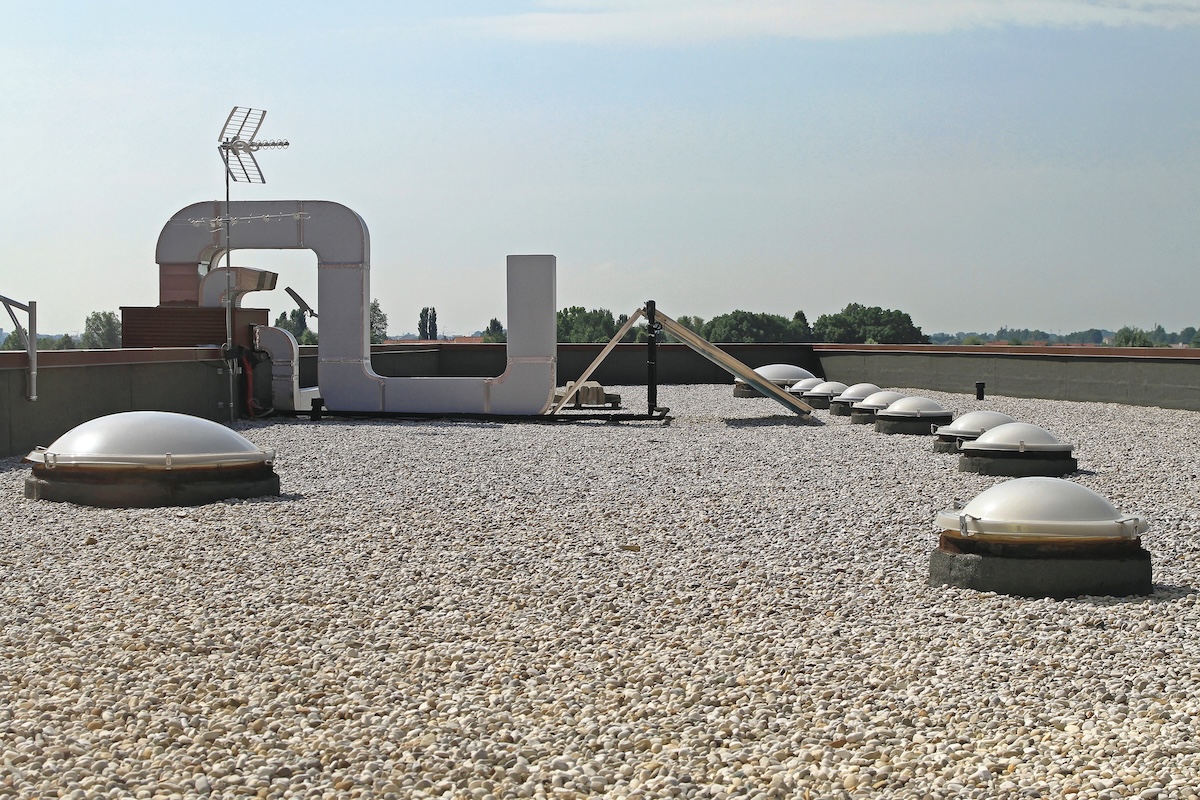
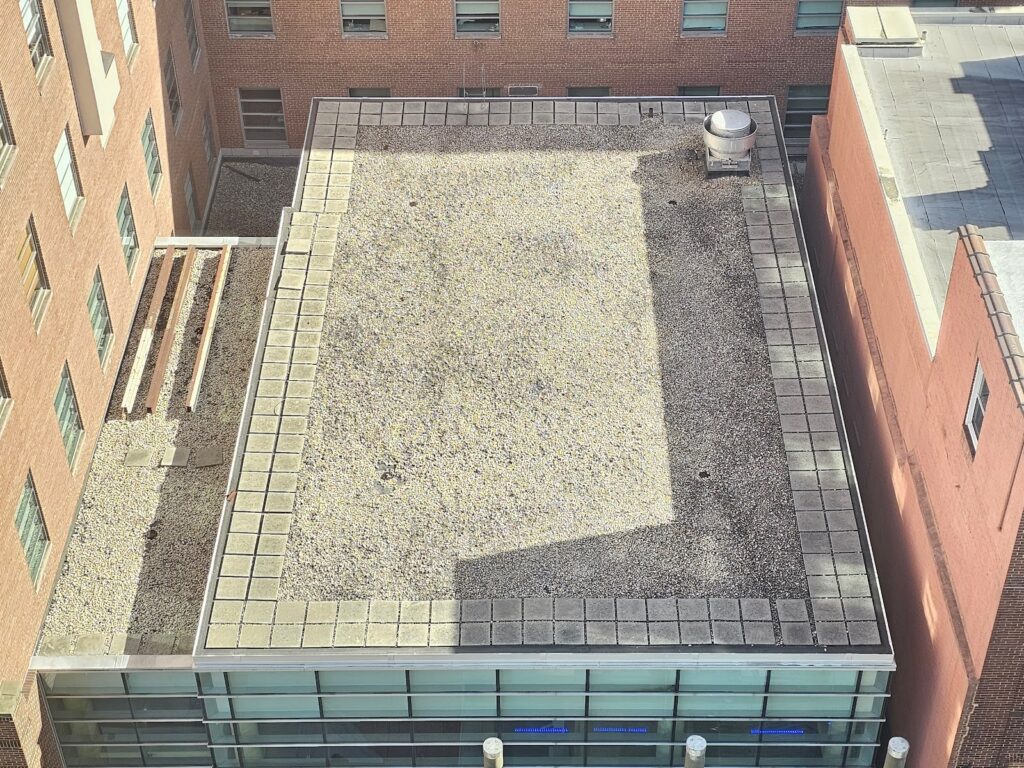
Ballasted roofing - loose-laid single-ply membrane (typically EPDM or early-generation TPO) held down by 10 to 12 pounds per square foot of river-wash stone - was common in Denver commercial construction from the late 1970s through the mid-1990s. The industrial buildings along the I-70 corridor east of downtown, the older commercial properties in the Globeville and Elyria-Swansea neighborhoods, and several of the DTC-era suburban office buildings constructed before 2000 carry original ballasted EPDM that is now 30 to 45 years old and approaching or past end of life.
We do not specify ballasted systems on new Denver commercial work. The reason is Colorado-specific: the combination of Denver's 30 psf ground snow load - already a structural dead-load demand - and the 10 to 12 psf of stone ballast creates a combined load that most commercial roofs cannot accommodate within their design envelope. The secondary concern is hail. A severe hail event impacting a ballasted roof does not just damage the membrane - it propels ballast stone as secondary projectiles, creating damage radius and liability risk beyond the roof surface itself. The 2023 and 2024 Denver hail seasons both produced events where ballasted roofs on I-70 corridor buildings generated projectile damage to equipment and vehicles in adjacent areas. We specify fully adhered or mechanically attached systems exclusively on new Denver commercial roofing.
For the existing ballasted inventory across the metro, the question is how and when to replace it - not whether. We assess ballasted systems, document their condition, and scope replacements that include explicit ballast-removal line items and structural review where snow-load capacity may limit the replacement system's insulation stack.
Denver's 30 psf ground snow load is the structural design driver for commercial roofs in the metro. Buildings designed to this load have structural capacity margins that vary by age, construction type, and original design basis. Adding 10 to 12 psf of river-wash stone ballast to a building with a 30 psf design snow load is, in effect, pre-loading the structure with the equivalent of a partial snow event before any actual snow accumulates. In the worst case - a heavy spring snow event on a ballasted roof - the combined dead load of ballast plus snow can approach or exceed the structural design capacity of buildings constructed in the 1970s and 1980s to the code standards of that era.
The Front Range also experiences Chinook wind events that drive sustained gusts exceeding 60 mph. Ballast stones under uplift-wind conditions can be displaced from the roof surface - lighter stones and edge areas are most vulnerable - reducing the effective holddown force on the membrane below while creating projectile risk in the surrounding area. This is not a theoretical concern; it is a documented failure mode on ballasted roofs in the I-70 corridor and the eastern plains commercial zones east of Denver. Fully adhered and mechanically attached systems eliminate this failure mode.
Ballast Removal Sequencing for Denver Reroofs
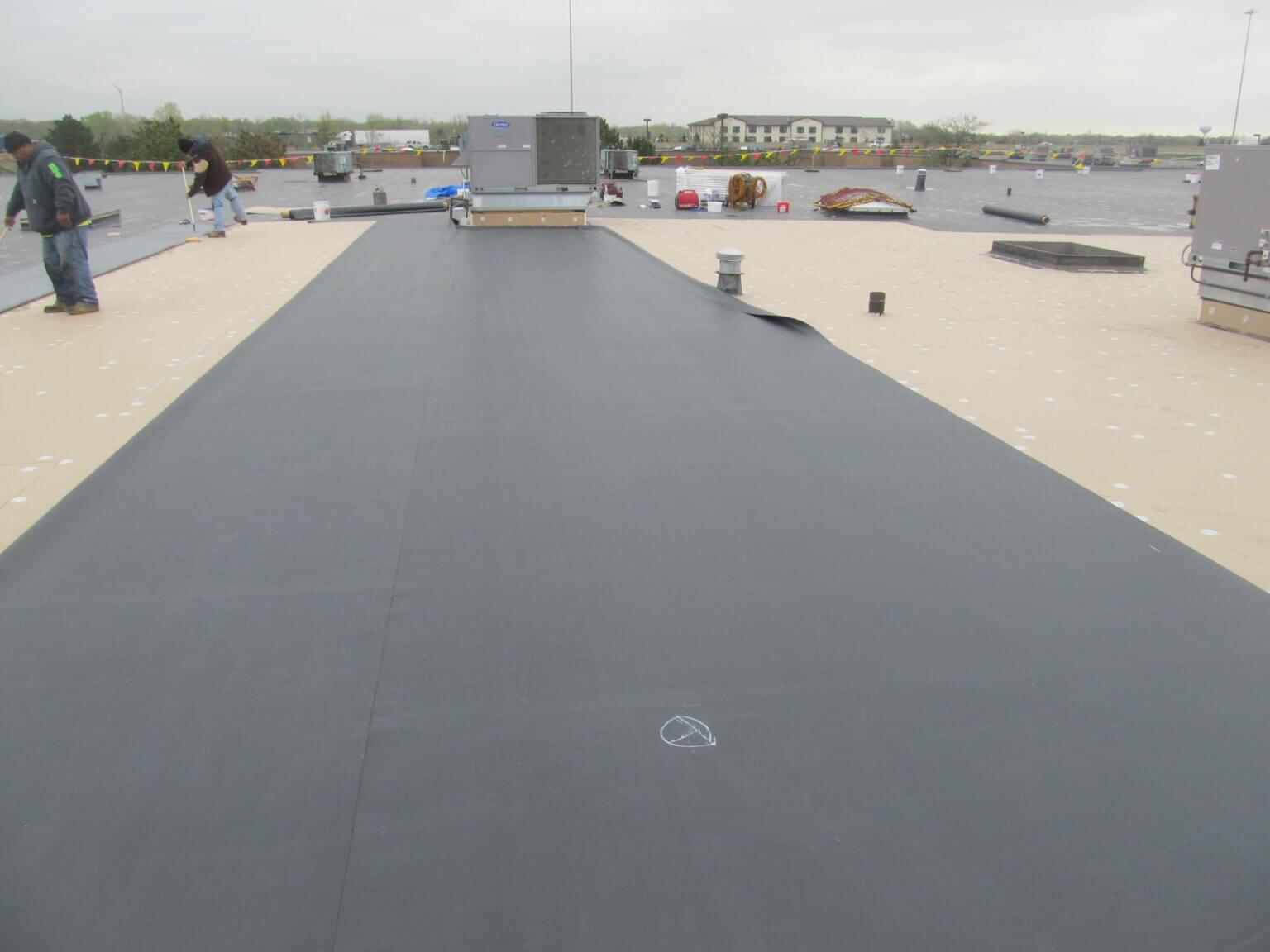
Ballast removal on a Denver commercial reroof is a distinct production phase with its own cost and schedule impact. The sequence: establish material staging in a waste container or designated lay-down area at the building perimeter, remove ballast in 5,000 to 10,000 square foot sections keeping pace with the membrane removal crew, haul stone to staging, dispose of or designate for reuse. River-wash stone is inert and can be reused for site landscaping or drainage - some Denver building owners stage it separately during reroof production to retain it for site use.
The labor cost for ballast removal on Denver commercial projects typically runs $0.25 to $0.40 per pound of stone - approximately $2.50 to $4.80 per square foot of roof area at standard ballast density. On a 100,000 square foot building, ballast removal alone is a $250,000 to $480,000 cost item before any membrane or insulation work begins. This cost is the same whether the project is a recover or a full replacement - the stone comes off first, regardless of what the new system will be. Any reroof scope on a ballasted building that does not include an explicit ballast-removal line item is an underscopped document.
Current Condition Assessment for Denver Ballasted Roofs
Assessing a ballasted system requires temporarily removing stone from representative locations to expose the membrane - you cannot evaluate a ballasted roof from the stone surface because the membrane is hidden beneath 4 to 6 inches of cover. We pull ballast from 8 to 10 locations across the roof, expose the membrane, and inspect seam condition, membrane brittleness (which indicates end of UV and thermal-cycling life even on a shielded membrane), and lap adhesion.
Moisture cores on ballasted Denver roofs go through the stone, through the membrane, and into the insulation below. Wet insulation under a ballasted system is common on roofs in the 30 to 40-year age range in Denver - the combination of stone weight shifting over time, drains partially buried by redistributed ballast, and Denver's freeze-thaw cycling means that water that does breach the membrane system sits in the insulation for extended periods. The discovery of wet insulation is not unusual on a 1985 ballasted system that has shown no interior leaks - the insulation can be substantially saturated before the moisture path reaches the deck and ceiling below.
Frequently asked questions
My Denver commercial building has a 1990 ballasted EPDM roof. Can it be recovered or does it need replacement?
We need to look at the membrane under the stone before we can answer that. We pull ballast from 8 to 10 locations, inspect the membrane and seams, and core-pull the insulation. If the membrane is still flexible - not brittle at the pull locations - and the insulation is dry, a mechanically attached or fully adhered TPO or EPDM recover over the existing system is sometimes viable. If the membrane is brittle, seams are delaminated, or insulation reads wet in more than 25 percent of cores, replacement is the honest scope. The ballast removal cost is the same in either case - it comes off first regardless.
Why doesn't hail protection from the ballast stone make ballasted roofs better in Colorado?
The stone does protect the membrane from direct hail impact under it. But in a severe hail event, the kinetic energy of 2-inch-plus stones impacting the ballast surface at 50 mph or more causes the ballast itself to become a projectile hazard - displaced stones can travel beyond the building perimeter, damaging equipment, vehicles, and adjacent structures. This is a documented failure mode in Colorado's hail belt, and the projectile liability exposure is one of the reasons we do not specify ballasted systems on new Denver commercial work.
How does Denver's snow load affect replacing a ballasted roof?
The new replacement system - fully adhered or mechanically attached TPO or EPDM over new insulation - typically weighs significantly less than the removed ballasted system. Removing 10 to 12 psf of stone and replacing it with a 2 to 4 psf single-ply assembly actually reduces the dead load on the structure, which is beneficial from a snow-load capacity standpoint. However, if the new insulation stack is substantially thicker than the existing assembly (for energy code compliance), the structural engineer should confirm that the new assembly dead load falls within the existing structural capacity margins before the spec is finalized.
Ballasted roof on a Denver commercial building?
We pull the stone from representative locations, inspect the membrane and insulation below, review the snow-load and structural implications, and produce a written scope that includes an explicit ballast-removal line item and a replacement-system specification engineered for Colorado's hail and snow environment.
| Scope Format | Written roof plan and photo record |
|---|---|
| Primary Market | Denver commercial buildings |