When Silicone Coating Is the Right Scope in Denver
Fluid-applied silicone roof restoration for Denver commercial buildings - 10, 15, and 20-year manufacturer warranty paths, altitude-UV durability, substrate prep requirements, and honest recover-vs-replace guidance for the Colorado climate.
Silicone fluid-applied roofing is one of the most cost-effective capital decisions available to Denver commercial building owners with a qualifying existing membrane. We scope, prep, and apply silicone systems with 10, 15, and 20-year manufacturer warranty paths - and we tell you upfront when coating is not the honest answer for a Colorado building.
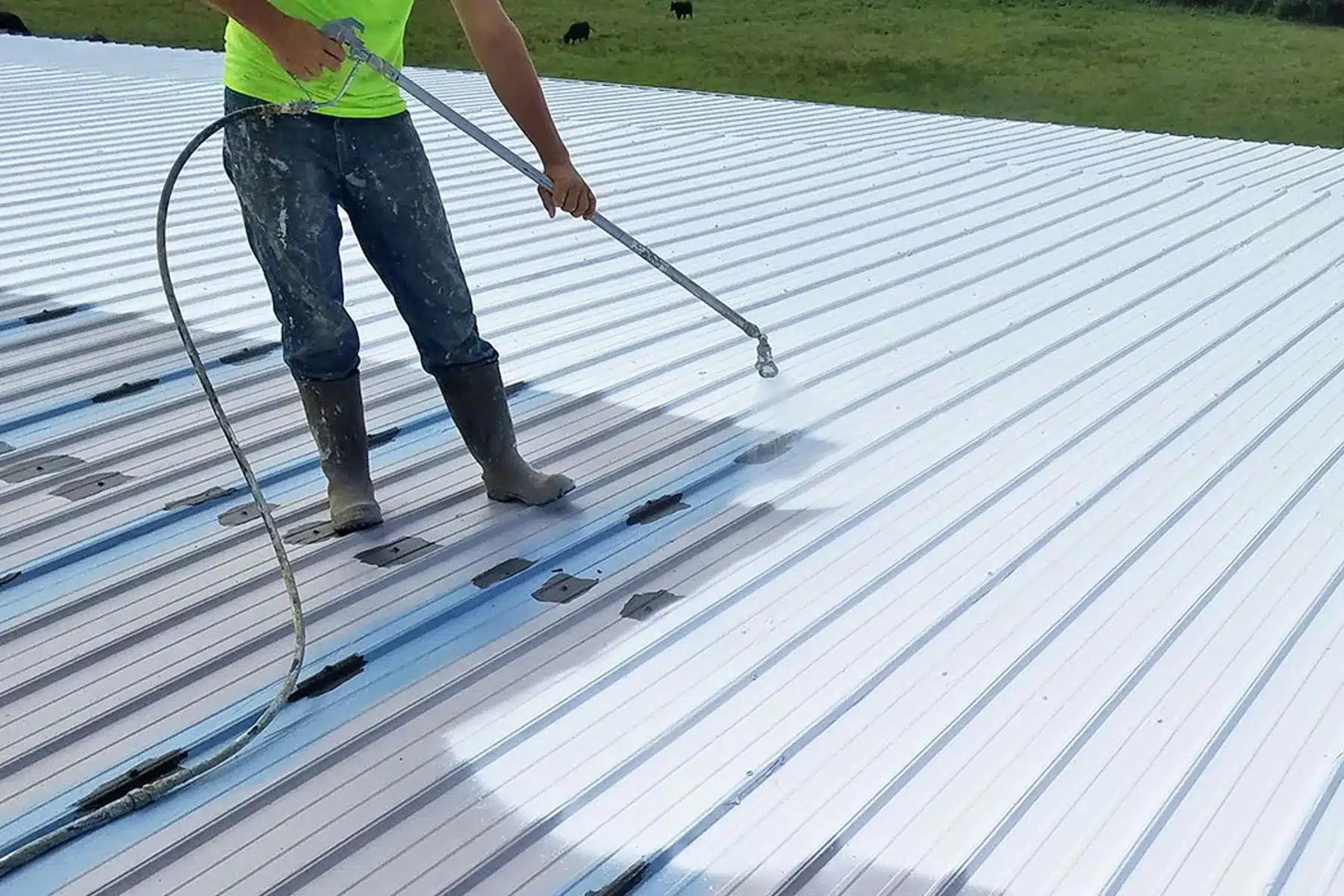
Silicone fluid-applied roofing restores a qualifying existing membrane by encapsulating it under a seamless, UV-stable silicone layer that carries a new warranty at roughly 50 to 60 percent of full replacement cost. The UV-stable chemistry matters particularly in Denver: at 5,280 feet, UV intensity runs 25 to 30 percent above sea level, and silicone's inherent UV resistance - it does not chalk or degrade under elevated UV exposure the way acrylic coatings do - makes it the appropriate fluid-applied system for this market. We specify silicone for Colorado commercial buildings; acrylic coatings are a sea-level specification.
The three warranty paths - 10-year, 15-year, and 20-year - are driven by application mil thickness, the number of coating passes, the membrane substrate type, and the manufacturer's published system design. Thicker applications cost more but deliver longer warranty terms and significantly better ponded-water resistance. Denver roofs see snowmelt ponding events in early spring as refreezing prevents drain flow - a 20-year high-build system handles those events more reliably than an entry-level 10-mil application.
A roof qualifies for silicone restoration when three conditions are met: the insulation is dry (confirmed by moisture core sampling), the existing membrane is structurally sound and adhered with no open seams or delaminated sections, and the deck is not compromised. Denver's freeze-thaw cycling makes the insulation-dry requirement particularly important - wet insulation in a Colorado building will not dry out under a new coating; it will continue to freeze-expand and degrade the bond between the existing membrane and the new silicone layer.
The most common qualifying substrates on Denver commercial buildings are: existing TPO that is 10 to 20 years old and still in good membrane condition (common on DTC and Stapleton-area buildings from the 2000s through early 2010s), modified bitumen SBS cap sheet in good surface condition, and spray polyurethane foam that has reached its re-coat interval. The UCHealth medical office portfolio, Anschutz campus ancillary buildings, and the Lockheed Martin and Raytheon facility networks in the south suburbs all include buildings with qualifying substrates that have been assessed for coating versus replacement - buildings in this range are exactly the profile where silicone restoration saves real capital.
Denver-specific timing: many of the Cherry Creek, DTC, and I-25 corridor office and medical-office buildings installed first-generation TPO between 2000 and 2012. These roofs are now 13 to 25 years old - within the qualification window for silicone restoration on buildings where the membrane held up. We can tell you where a specific roof sits in that window from a single inspection visit.
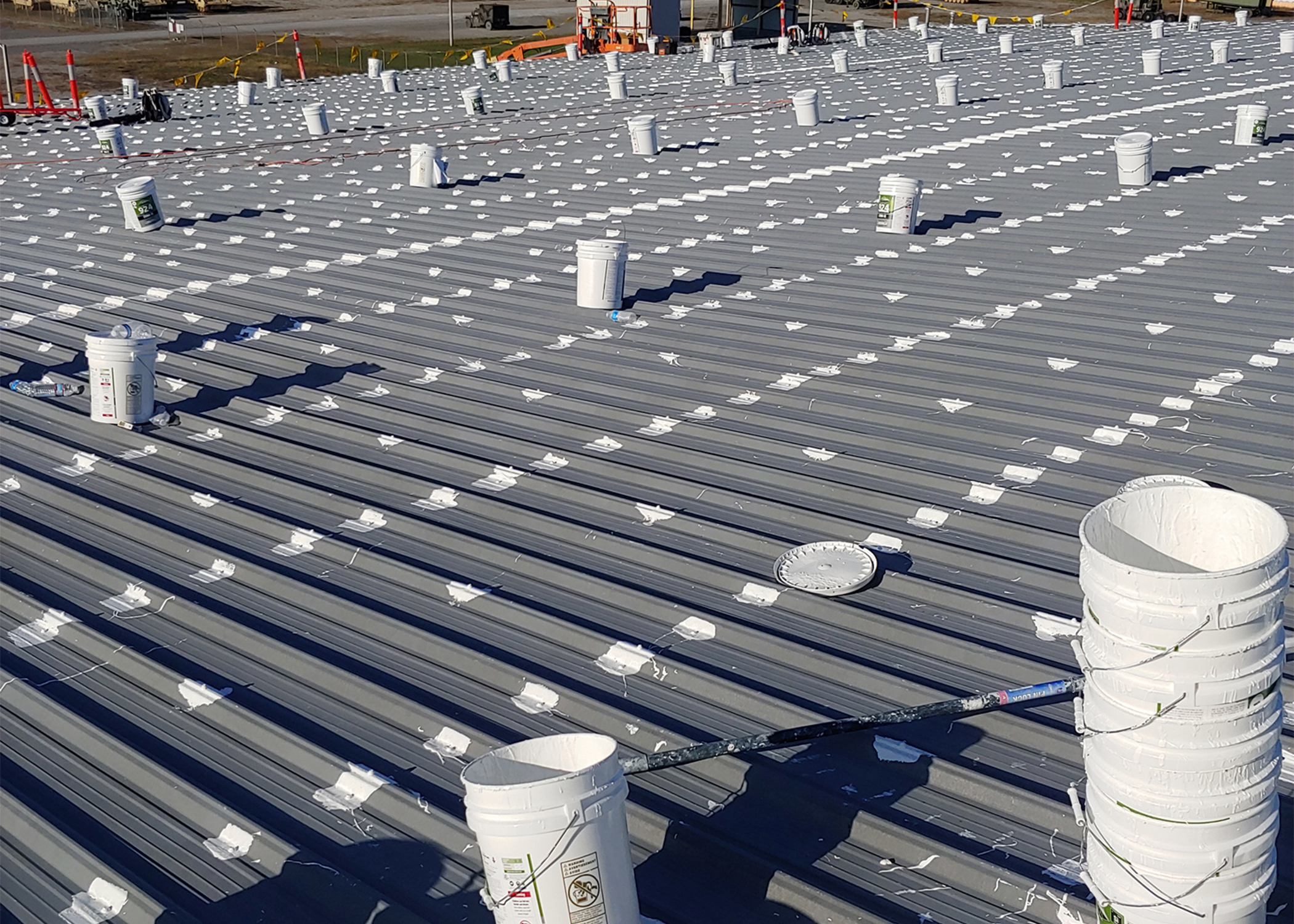
Silicone coating adhesion and long-term performance are entirely dependent on substrate preparation. Standard prep sequence: power washing to remove all contamination, biological growth, and loose aggregate; full inspection and documentation of open seams, failed flashings, or wet areas requiring repair before coating; targeted repair of all deficiencies; and manufacturer-specified primer on substrates requiring it. We do not shortcut prep to hit a price point - the warranty inspection will find any preparation failure.
Denver's altitude and climate create two substrate prep considerations different from lower-elevation markets. First, the elevated UV and lower humidity mean that washed TPO surfaces can begin to re-oxidize faster than at sea level, narrowing the application window between washing and coating. We schedule coating immediately after prep - we do not leave washed membrane exposed for multiple days. Second, Denver's spring shoulder season - when snowmelt applications are most common - can produce sub-40°F ambient temperatures that fall outside manufacturer application windows. We check and log ambient temperature and dew point before every application session and do not apply outside the manufacturer's specified range.
Base coat and top coat go on in multiple passes to achieve the specified mil thickness. We use a wet-mil gauge after every 1,000 sq ft of application and at every flashing detail to verify thickness before the material cures. Silicone cannot be added after cure without additional primer, and at altitude, cure rates can differ from the manufacturer's published sea-level guidance - we account for that in our sequencing.
Fifteen-year systems apply 25 to 30 dry-mil in two or three passes and typically include reinforcing fabric embedded in the base coat at flashings and seams. The fabric reinforcement is what transitions the coating from a field membrane to a warranted flashing assembly - and it is what the manufacturer inspects at warranty inspection. On Denver roofs with significant parapet lengths, the fabric detail adds meaningful labor cost but changes the warranty terms materially.
Twenty-year systems apply 30 to 35 dry-mil in three passes with full fabric reinforcement at all seams and flashings. This is the maximum warranty path on fluid-applied silicone and the one that produces the lowest lifecycle cost per year for buildings with longer capital horizons. In Denver's elevated-UV environment, the additional build thickness also provides a meaningful UV-degradation buffer relative to thinner systems. Some manufacturers require a pre-application inspection by their field representative before issuing the 20-year warranty - we schedule and coordinate that visit as part of the project scope.
| Scope Format | Written roof plan and photo record |
|---|---|
| Primary Market | Denver commercial buildings |
Commercial Re-Roofing in Denver, CO
Commercial Re-Roofing for commercial buildings across Denver.